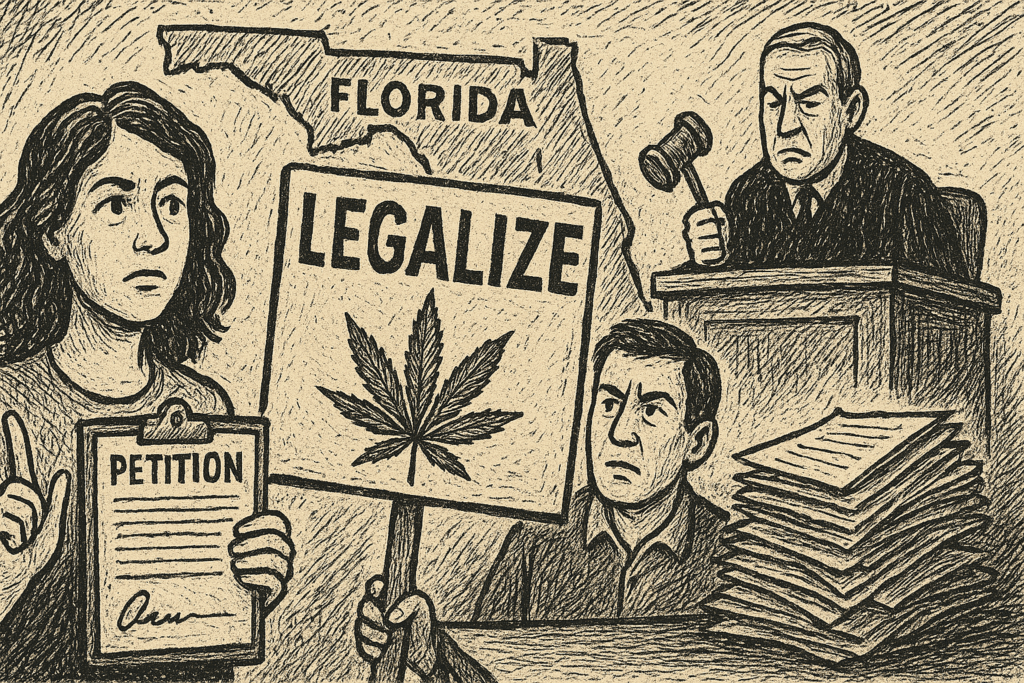
In the simmering fight over cannabis reform, Smart & Safe Florida says it has still cleared the bar to land a legalization measure on the state’s 2026 ballot — even after the courts wiped out roughly 200,000 of their petition signatures for procedural reasons.
On Tuesday, the group formally declined to appeal a recent ruling by a circuit judge — who agreed with state officials that formatting errors invalidated ballots — letting the decision stand. But in a show of quiet confidence, Smart & Safe pointed out that they had already submitted more than 1,010,000 signed petitions (excluding pending mail‑in ballots), a figure well above the roughly 880,000 verified signatures required to qualify.
“We are confident … so long as the state does its job in good faith to process the submitted petitions and accurately report the verification totals,” the campaign said in its statement.
They warned, though, that Florida’s sluggish bureaucracy — including a months‑long freeze on verification and a lagging online tracking system — threatens to muddy the final count. “The public deserves to have their petitions counted,” the group urged, calling on Secretary of State Cord Byrd to expedite processing.
This isn’t Smart & Safe’s first run at the ballot. Their 2024 initiative narrowly earned majority support but fell short of the state’s onerous 60 percent super‑majority requirement for constitutional amendments.
In the new version, the campaign has introduced changes meant to blunt some of the political heat it drew last time — banning public smoking and vaping, and promising the legislature will regulate how and where marijuana can be consumed.
Still, the bigger story may lie in the evolving landscape of Florida’s ballot‑initiative laws. In 2025, the legislature enacted a sweeping reform that slashes petition‑collection windows, bans out‑of‑state canvassers, and pushes signers to provide sensitive personal details — limitations that critics say undercut grassroots democracy.
For legalization supporters, the stakes couldn’t be higher. The coming months will test not just whether petition‑gatherers can surmount legal hurdles — but whether Florida voters still get a say.
Dabbin-Dad NEwsroom