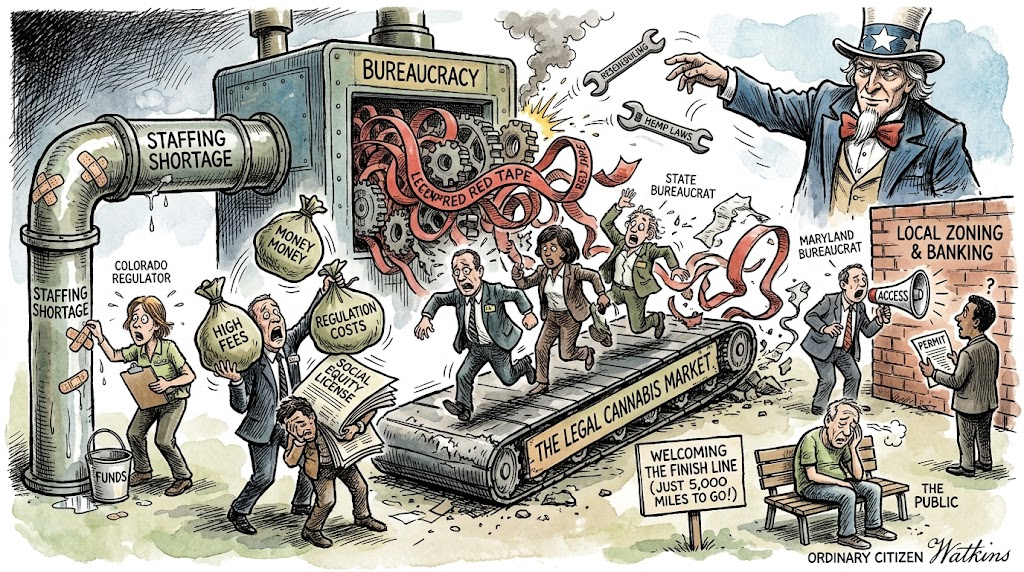
Remember when legalizing cannabis was pitched as the magical finish line that would print money? Surprise—it’s actually an endless bureaucratic treadmill. Regulators in Colorado, Massachusetts, Maryland, and Minnesota are discovering that governing legal weed is a permanent beta test.
Colorado’s regulatory agency can currently only afford 84 of its 158 staffers because funding your department with industry fees is a predictably terrible idea when the market inevitably shrinks.
Massachusetts realized a little too late that slapping $65,000 fees on medical operators while forcing them to grow, manufacture, and dispense their own supply completely destroyed any hope of social equity, forcing a massive legislative backtrack.
Maryland found out that handing out equity licenses is a nice PR move, but completely useless if local zoning boards, landlords, and banks won’t actually let those businesses open.
Minnesota is now desperately trying to ensure equity applicants actually survive economically while simultaneously navigating complex Tribal compacts. Top off this administrative chaos with the federal government constantly moving the goalposts on marijuana rescheduling and hemp crackdowns, and the lesson is clear: passing the law was the easy part, but babysitting a heavily taxed, constantly shifting industry is the real buzzkill.
Dabbin-Dad Newsroom