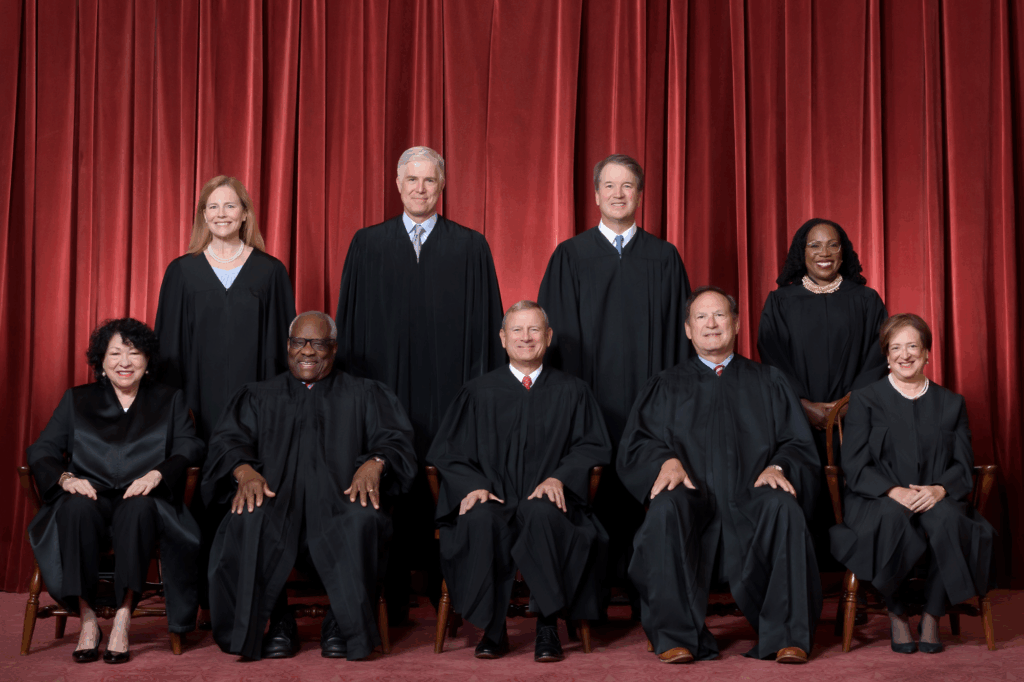
The United States Supreme Court has agreed to examine the constitutionality of a federal statute that prohibits individuals who are unlawful users of or addicted to any controlled substance from possessing firearms. This decision arises from a case involving Ali Danial Hemani, a Texas resident charged with felony gun possession after admitting to regular marijuana use. The case, United States v. Hemani, will be argued during the Court’s 2025–2026 term, with a ruling anticipated by summer 2026.
Case Background
In 2022, federal authorities conducted a search of Hemani’s residence in Texas, uncovering a Glock 9mm handgun, 60 grams of marijuana, and 4.7 grams of cocaine. Hemani acknowledged his regular use of both substances. He was indicted under 18 U.S.C. § 922(g)(3), a provision of the Gun Control Act of 1968 that prohibits firearm possession by individuals who are unlawful users of or addicted to any controlled substance. Hemani challenged the indictment on constitutional grounds, arguing that the statute infringes upon his Second Amendment rights. The district court agreed, dismissing the indictment. The Fifth Circuit Court of Appeals upheld this decision in January 2025, concluding that the law lacked sufficient historical precedent to justify disarming someone not currently impaired by drugs.
Legal Context
The Supreme Court’s decision to review Hemani’s case follows its 2022 ruling in New York State Rifle & Pistol Association v. Bruen, which established that modern firearm regulations must be consistent with historical traditions dating back to the 18th and 19th centuries. The Court’s application of this “historical tradition” standard has led to the invalidation of several contemporary gun control measures. In this context, the federal government contends that the prohibition on firearm possession by drug users aligns with historical practices, citing early American laws that restricted firearm access for individuals deemed dangerous due to substance abuse. Conversely, Hemani’s legal team argues that the statute is overly broad and lacks a direct historical analogue, potentially affecting millions of Americans who legally use substances like marijuana in states where it is permitted.
Broader Implications
The outcome of this case could have significant implications for the intersection of gun rights and drug use in the United States. With approximately 20% of Americans reporting having used marijuana, and many states legalizing its use, the Court’s interpretation of the Second Amendment in this context will be closely scrutinized. The decision may also influence other pending cases involving firearm restrictions for individuals with substance use histories.
Conclusion
As the Supreme Court prepares to hear arguments in United States v. Hemani, the legal community anticipates a landmark decision that will define the scope of Second Amendment protections concerning individuals who use marijuana and other controlled substances. The ruling will likely set a precedent for future cases and shape the national discourse on gun rights and drug policy.
Dabbin-Dad Newsroom