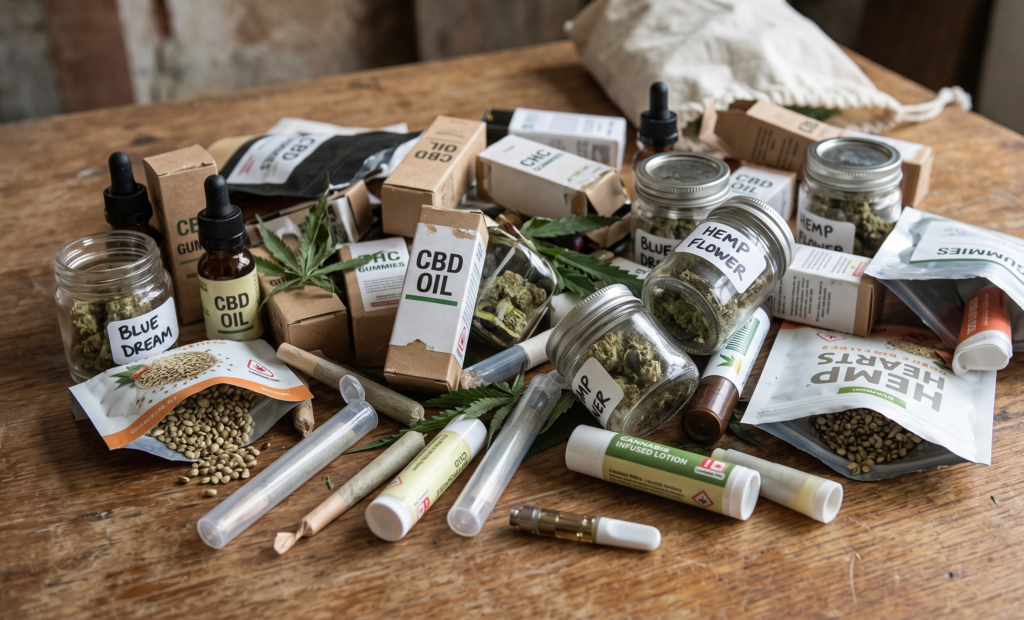
Imagine holding two identical THC gummies. Both contain five milligrams of THC and will produce exactly the same effects. A lab test wouldn’t be able to tell them apart. Yet, depending on where you live, one gummy requires a trip to a heavily regulated, state-licensed dispensary, complete with high taxes and seed-to-sale tracking. The other gummy can be legally ordered online and shipped directly to your front porch, even if you live in a state where dispensaries don’t exist.
It sounds contradictory, but this divide isn’t rooted in botany—it’s rooted in federal law.
The biggest misconception in the market is that hemp and marijuana are two entirely different plants. In reality, they are both classifications of the exact same species: Cannabis sativa L.
The legal distinction boils down to a single, arbitrary metric established by the government. Under current federal law, cannabis that contains no more than 0.3% Delta-9 THC by dry weight is legally defined as “hemp.” If the plant exceeds that 0.3% threshold, it is legally classified as “marijuana” and becomes a heavily regulated controlled substance.
This means that two plants can look identical, smell identical, and produce similar effects, yet be governed by entirely different legal systems. The law regulates the molecule’s concentration, not the plant itself.
This strange dual-market system was born from the 2018 Farm Bill, which legalized hemp at the federal level. In doing so, lawmakers inadvertently sparked a massive new economy built entirely around hemp-derived Delta-9 THC gummies, beverages, and other cannabinoids that could suddenly be sold across state lines.
The lines blurred even further with products like THCA flower. THCA is non-psychoactive until it is heated (like when it is smoked). Because the federal law only measures Delta-9 THC content before the product is consumed, THCA flower legally qualifies as hemp when it ships, despite producing a classic marijuana high once a lighter touches it.
Meanwhile, state-regulated cannabis systems continued operating on their own track, complete with expensive licensing, high taxes, and strictly confined retail environments. The result is a fractured marketplace where an edible from a dispensary and a hemp beverage shipped to your home originate from the same plant but follow completely different rulebooks.
For the average consumer, these regulatory gymnastics are exhausting. People who are utilizing cannabinoids for wellness purposes—like better sleep, quicker recovery, or relaxation—generally don’t care about the legal distinction between hemp and marijuana. They care about efficacy and safety.
This is where companies like Edibles.com are changing the game. Launched in 2025, this Atlanta-based marketplace bypasses the traditional “indica vs. sativa” labels entirely. Instead, they operate on a “health, not high” philosophy, organizing top-tier hemp-derived products by the specific outcome they support: sleep, energy, relaxation, or social occasions. For many Americans living outside of legal cannabis markets, platforms like this offer their first opportunity to have industry-leading brands (like Wyld, Wana, and Camino) shipped directly to their doors.
Because the hemp market operates outside the closed loop of state dispensary regulations, transparency falls squarely on the shoulders of the consumer and the seller.
In a legal dispensary, the state mandates heavy testing before a product ever hits the shelf. For online hemp sales, products are verified against the federal 0.3% standard by third-party labs, but it is up to the consumer to actually check the results. That is why learning to read a Certificate of Analysis (COA) is the most critical skill for a modern cannabis consumer. A COA verifies the cannabinoid content and ensures the product is free from pesticides, residual solvents, and heavy metals.
Ultimately, hemp and cannabis are not competitors. They are the same plant, separated only by legal definitions. As lawmakers continue to wrestle with new regulations, the lines between these two markets will likely continue to narrow. But for now, understanding why that gummy can ship to your door is the first step to being an empowered consumer.
Dabbin-Dad Newsroom