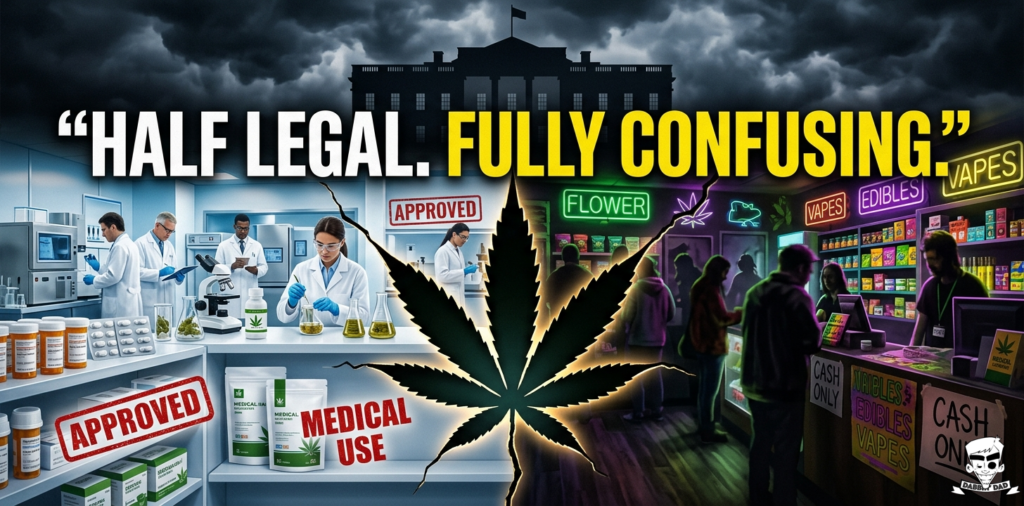
Washington didn’t legalize cannabis—it complicated it.
The Trump administration’s latest move to loosen federal restrictions is being framed as progress, and to be fair, it is… just not in the way most people think. By easing how medical marijuana is treated at the federal level, the door cracks open for more research, potential tax relief, and a wave of institutional money that’s been waiting on the sidelines.
But that door doesn’t swing wide. It barely opens.
This shift mainly helps tightly controlled, state-approved medical programs and future FDA-backed cannabis products. Meanwhile, the much larger recreational market—the one driving real consumer demand—remains stuck in the same legal gray zone it’s been in for years.
So instead of clarity, the industry gets a split reality.
On one side, medical cannabis inches toward legitimacy, with fewer barriers and more opportunity. On the other, recreational businesses are still navigating a maze of federal illegality, banking challenges, and regulatory risk. Add in growing scrutiny on hemp-derived products, and the landscape becomes even more fractured.
Investors noticed. Stocks popped on the headlines, then cooled just as fast once the fine print set in. Because while this move may ease some pressure—especially around taxes and research—it doesn’t solve the industry’s core problem: federal law still doesn’t match reality on the ground.
What Trump is doing here is walking a political tightrope—signaling support for medical cannabis and economic growth, while stopping well short of full legalization. It’s calculated, cautious, and leaves plenty unresolved.
The takeaway is simple:
Cannabis didn’t just move forward—it got more complicated.
Dabbin-Dad Newsroom