This isn’t a new trend—it’s been baked into cannabis for a long time.
Long before legalization spread state by state, the industry was already built around cash. And even now, after years of regulated markets and licensed dispensaries, that foundation hasn’t really changed. If anything, it’s just become more visible.
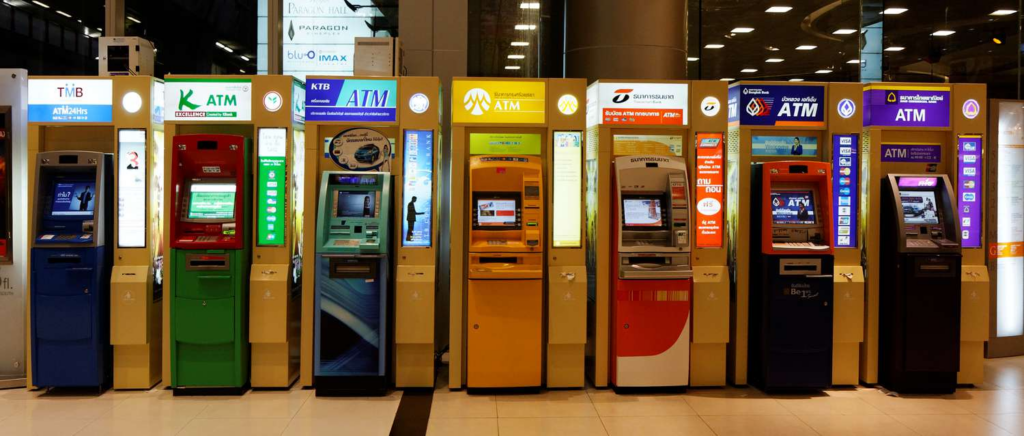
I’ve seen it firsthand—both inside licensed dispensaries and in the broader cannabis ecosystem where cash has always been the default. Different settings, same reality: when traditional banking stays at arm’s length, cash fills the gap. And where cash dominates, ATMs naturally follow.
That’s the core of it. Cannabis doesn’t just use ATMs—it relies on them.
Because federal prohibition still keeps major banks and card networks cautious or outright absent, dispensaries have spent years operating in a workaround economy. Credit cards are unreliable. Debit processing can be inconsistent. And digital payment solutions have been repeatedly tested, restricted, or shut down.
So the customer experience often starts the same way: find cash first, then shop.
That simple reality is why ATMs became part of the cannabis retail footprint. Whether installed inside dispensaries or sitting just outside them, they’re not an accessory—they’re infrastructure. Without them, the flow of commerce slows down immediately.
Over time, the industry tried to modernize around this limitation. “Cashless ATM” systems emerged as a creative workaround, routing purchases as ATM withdrawals rather than traditional card payments. For a while, they helped bridge the gap between old banking restrictions and new retail demand. But as scrutiny increased, many of those systems were scaled back or eliminated, pulling more transactions back into physical cash.
What’s left is a retail environment where cash isn’t just common—it’s central.
And that’s where things get interesting. Because while dispensaries deal with the friction of cash-heavy operations—security, storage, transport, compliance overhead—ATM operators have quietly built one of the most reliable placement markets in modern retail. Steady traffic, repeat customers, and predictable transaction behavior make cannabis locations some of the strongest ATM performers out there.
This has been playing out for years, not months. And even as legalization expands and payment systems evolve, the underlying structure hasn’t fully shifted. The cannabis industry may be growing up on paper, but in practice, a lot of it still runs on physical currency.
Cannabis didn’t become the biggest ATM market by accident.
It became one by history.
Dabbin-Dad Newsroom