Connecticut’s 2026 legislative session just wrapped up, and it brought the biggest shake-up to the state’s cannabis scene since the dawn of legalization. Thanks to House Bills 5350 and 5222, the rules of the game are changing for absolutely everyone, from local hemp producers to massive medical dispensaries. While the newly minted laws open up some incredibly lucrative doors for expansion, they also lay down a maze of strict compliance traps. If you are operating in the cannabis space, it is officially time to audit your corporate structures and product lines before the regulatory rollout begins this fall.
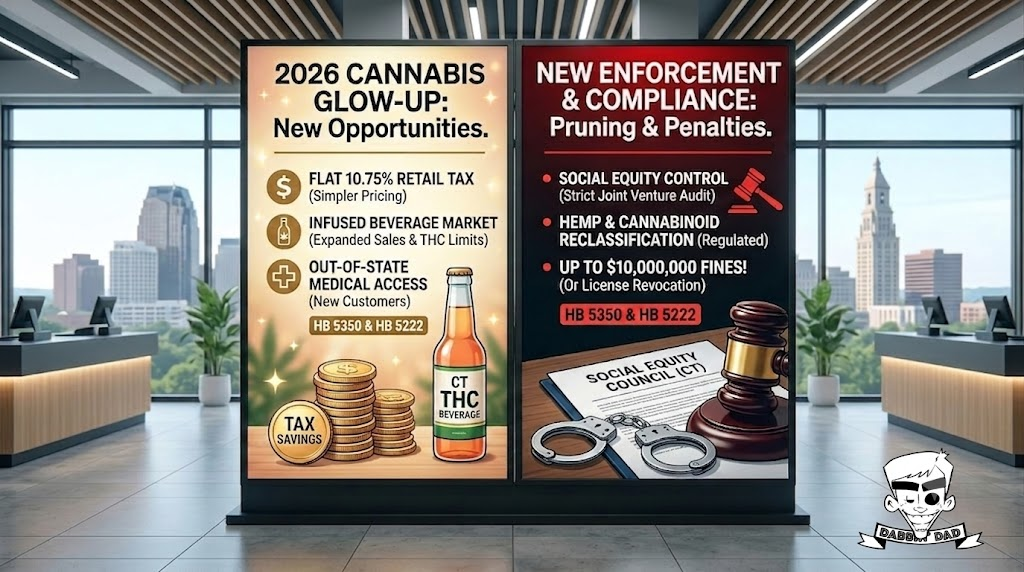
The rollercoaster officially leaves the station on October first, bringing a mix of exciting expansions and fresh red tape. On the bright side, the headache-inducing, potency-based excise tax is being tossed out the window in favor of a straightforward, flat 10.75 percent retail tax. This will be a massive relief for retailers trying to streamline their pricing. Infused beverage manufacturers are also getting a major boost, with increased allowable THC limits and newly expanded avenues for both retail and on-premises sales. Dispensaries and hybrid retailers have reason to celebrate too, as Connecticut’s medical program is finally opening its doors to out-of-state patients and caregivers. However, this same date brings strict new compliance rules, requiring updated warning labels for high-potency products, simplified delivery protocols, and new limitations on financing arrangements between cannabis establishments.
Just as operators catch their breath, November first brings a massive regulatory crackdown on social equity joint ventures. The state has clearly noticed that some businesses are trying to quietly transfer operational control away from social equity owners, and regulators are putting their foot down hard. The new legislation unleashes rigorous ownership review procedures and demands new annual certifications to ensure equity partners are actually the ones calling the shots. If you are an investor or backer trying to skirt these rules through creative management agreements, you might want to call your lawyer immediately. The updated laws arm the Social Equity Council with the power to slap non-compliant businesses with astronomical fines of up to ten million dollars or strip them of their operating licenses entirely.
Finally, as the year winds down, December first closes the lingering regulatory loopholes between hemp and cannabis. The new framework clearly defines the legal status of hemp-derived goods, manufactured cannabinoids, and minor cannabinoids. Food, beverage, and retail businesses can no longer blindly assume that their hemp products fly under the regulatory radar. Going forward, many of these hemp-derived items are explicitly bound by Connecticut’s strict cannabis laws, meaning businesses must re-verify their ingredient classifications to ensure they do not accidentally run afoul of the newly expanded definitions.
With these critical rollout dates looming, operators simply cannot afford to sit back and wait for further guidance from the Department of Consumer Protection to start getting their houses in order. Whether you need to redesign your high-potency packaging, audit your corporate partnerships to ensure true social equity control, or double-check your hemp product lines, the time to act is right now. Taking a proactive approach today will ensure your business keeps growing like a weed instead of getting permanently pruned by state regulators.
Dabbin-Dad Newsroom