Connecticut spent years building a heavily regulated cannabis industry with licenses, zoning battles, million-dollar dispensaries, and enough paperwork to make your eyes bleed.
And yet… people are still buying weed at smoke shops.
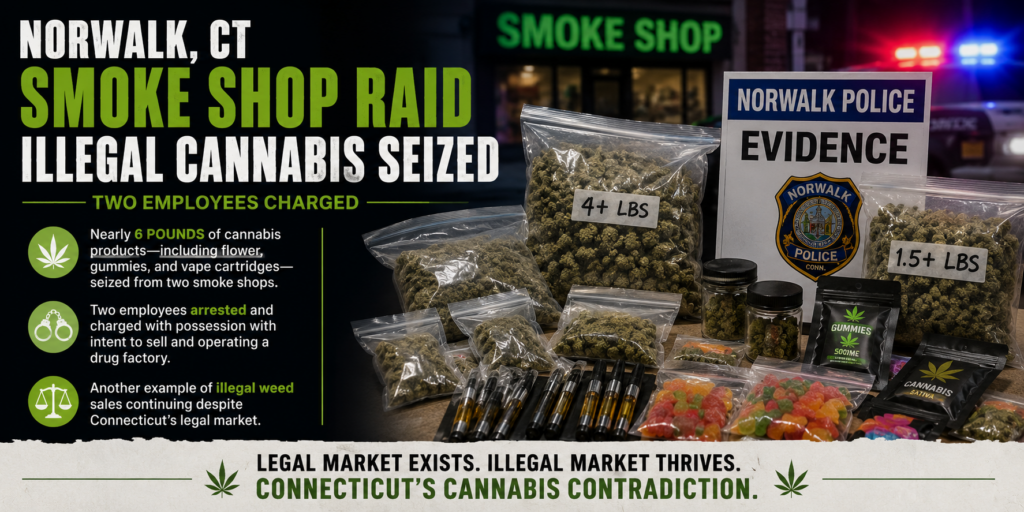
This week, Norwalk police raided two local smoke shops and seized nearly six pounds of cannabis products, including flower, gummies, and vape cartridges. Two employees were arrested after investigators said the stores were illegally selling marijuana without state dispensary licenses.
One shop allegedly had over four pounds of cannabis products inside. The other had more than a pound and a half. Police hit them with charges ranging from possession with intent to sell to operating a drug factory.
And honestly? None of this is surprising anymore.
Connecticut created one of the most expensive and tightly controlled cannabis markets in the country. The result is a legal system where a handful of massive operators dominate shelves while smaller legacy sellers and local entrepreneurs get pushed to the sidelines.
Meanwhile, smoke shops keep filling the gap.
Because for a lot of consumers, the experience is easier, cheaper, and more familiar than dealing with the state’s sanitized dispensary model. No online queue. No Apple Store vibes. No security guard staring at you while you spend $65 on dry eighths and a “wellness experience.”
Just walk in, grab your stuff, and leave.
The state keeps cracking down, though. Norwalk isn’t the only city going after unlicensed cannabis sales. In New Haven, the massive downtown smoke shop “Anesthesia” recently shut down after ongoing legal fights with the state over alleged illegal cannabis sales.
And this is the contradiction Connecticut still hasn’t figured out:
Legal weed exists almost everywhere now. Cannabis culture is mainstream. But the legal market is still so restrictive and expensive that underground and gray-market sellers continue thriving right out in the open.
The state wants cannabis treated like alcohol… except with far more regulations, far fewer licenses, higher prices, stricter packaging rules, and almost zero room for smaller operators.
Then officials act shocked when people keep buying weed elsewhere.
None of this means smoke shops should be openly ignoring state law. But Connecticut’s enforcement problem is really a symptom of a bigger issue:
The legal market still doesn’t fully serve the people who actually built cannabis culture in the first place.
Until that changes, raids like this are probably going to keep happening every few months while everyone pretends to be surprised.
Dabbin-Dad Newsroom