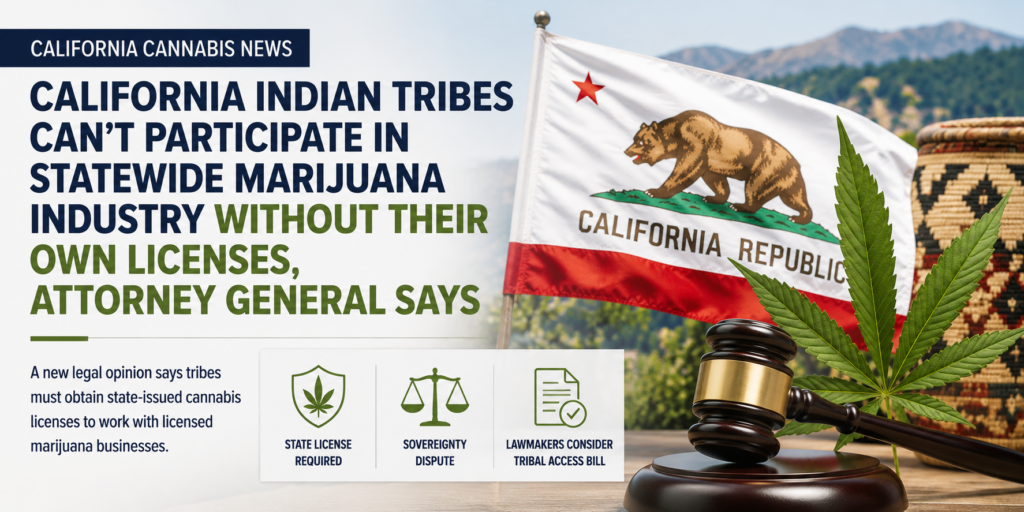
California’s legal cannabis market may be one of the largest in the world, but Native American tribes are still finding themselves on the outside looking in.
A new legal opinion from California Attorney General Rob Bonta concludes that federally recognized tribes cannot conduct cannabis business with state-licensed marijuana companies unless they first obtain their own state-issued cannabis licenses. In other words, tribal governments can’t simply rely on their own regulatory systems—even if those systems closely mirror California’s rules.
The opinion addresses a long-running dispute over tribal sovereignty and cannabis commerce.
Many tribes have argued that because they are sovereign governments, tribal cannabis operations regulated under tribal law should be able to participate in California’s broader marijuana market without being forced into the state’s licensing system. The attorney general disagreed, stating that commercial cannabis activity occurring off tribal lands falls under California’s licensing requirements.
The ruling arrives at a particularly awkward moment.
California lawmakers are currently considering legislation that would make it easier for state-licensed cannabis businesses to work with tribal cannabis operators through formal agreements and certifications. Supporters say those changes would finally give tribes a pathway into the state’s regulated cannabis economy while respecting tribal sovereignty.
For many tribal leaders, the issue goes far beyond marijuana.
The fight centers on a broader question that has followed tribal governments for decades: How much authority should states have over economic activity conducted by sovereign nations?
Cannabis has simply become the latest battleground.
Critics of California’s current system argue tribes face unique barriers that state-licensed businesses do not, including licensing complications, financing challenges, banking restrictions and jurisdictional uncertainty. Those obstacles have slowed tribal participation in an industry that many believed could create significant economic opportunities for Native communities.
Supporters of the attorney general’s position counter that California’s legal cannabis market depends on consistent testing, tracking, taxation and enforcement standards. Allowing separate regulatory systems to interact with the statewide market without state oversight, they argue, could create compliance gaps and legal confusion.
For now, the attorney general’s message is straightforward:
If tribes want to participate in California’s regulated cannabis supply chain, they’ll need a California license first. Whether lawmakers decide to create a more tribal-friendly pathway remains an open question.
Dabbin-Dad Newsroom