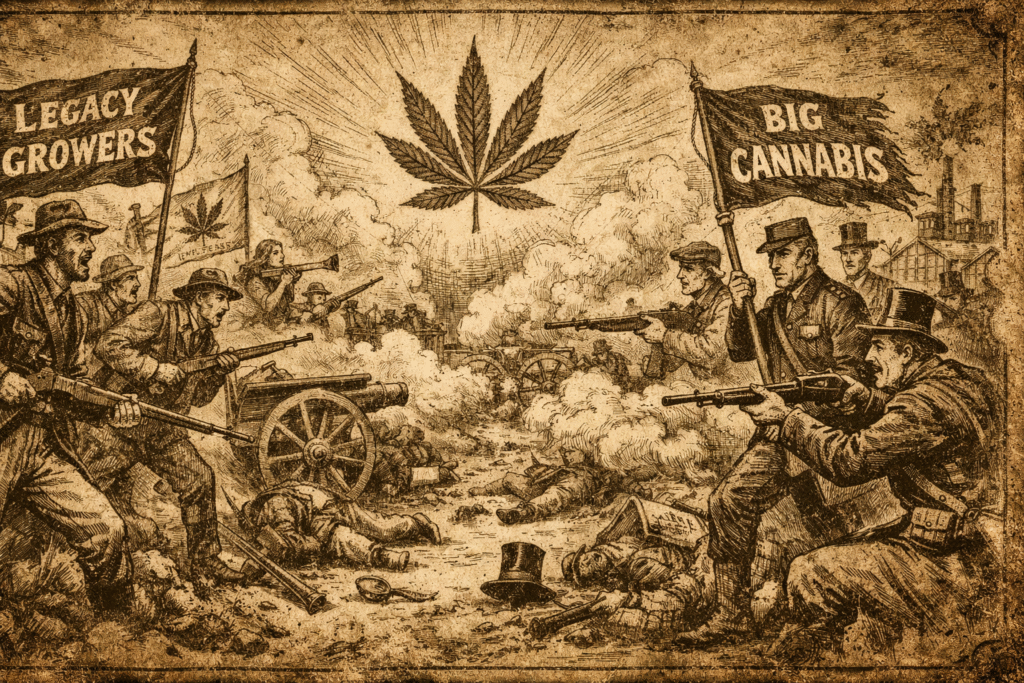
As cannabis continues its transition from underground counterculture to regulated global industry, new tensions are emerging—often from within the community itself. Advocates, entrepreneurs, legacy operators, and corporate players are increasingly divided over what legalization should look like and who should shape the future of the plant.
At the center of the conflict is a clash between cultural identity and commercialization. Many longtime activists and legacy market participants view cannabis as more than a commodity—it’s a social movement tied to criminal justice reform, patient access, and community values. Others, particularly large corporate operators and investors, tend to frame cannabis primarily as a consumer packaged good and growth market. This philosophical divide has fueled disputes over policy priorities, licensing structures, and market access.
Another major flashpoint is political and ideological fragmentation. Some factions within the cannabis space are accused of attempting to define who is “acceptable” within the industry, sometimes prioritizing political alignment or economic positioning over broader legalization goals. Critics argue this kind of gatekeeping risks undermining the shared mission that historically unified cannabis advocacy.
The legal transition itself has also intensified competition. As legalization expands, legacy growers and small operators often face high compliance costs, strict regulations, and limited access to capital. Meanwhile, well-funded multi-state operators and large corporate entrants can scale quickly, creating fears of market consolidation and cultural dilution.
Despite the friction, many observers see these conflicts as signs of a maturing industry. As cannabis moves further into mainstream commerce and public acceptance, stakeholders are forced to confront difficult questions about equity, authenticity, and the balance between profit and purpose.
Ultimately, the future of cannabis culture may depend on whether the industry can reconcile its activist roots with its corporate future—or at least find a way for both to coexist without fracturing the movement that helped bring legalization this far.
Dabbin-Dad Newsroom