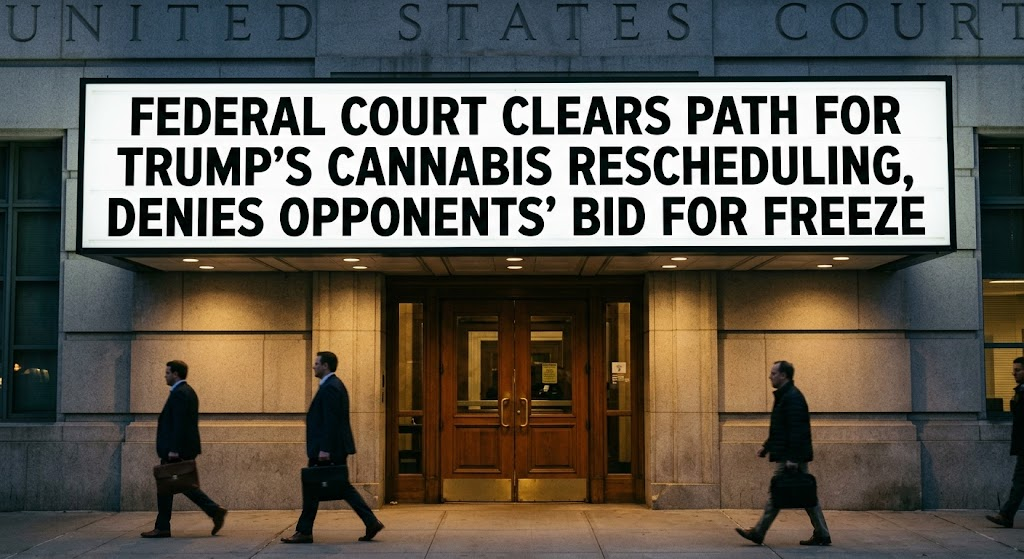
The Trump administration has scored a critical legal victory in its drive to reclassify cannabis under federal law. A federal appeals court firmly rejected an emergency request from anti-legalization groups, drug-testing firms, and pharmaceutical interests aimed at freezing the process in its tracks.
In an order issued by the U.S. Court of Appeals for the District of Columbia Circuit, judges concluded that opponents failed to clear the high bar required to secure a stay while the broader lawsuit plays out. The decision allows the federal government to keep the momentum going on moving marijuana from the restrictive Schedule I classification down to Schedule III, dealing a direct blow to organizations like Smart Approaches to Marijuana (SAM) and the National Drug and Alcohol Screening Association (NDASA).
Opponents argued that easing restrictions would slash taxes for cannabis operators, spark market growth, and lead to widespread abuse. However, the Department of Justice pushed back sharply, accusing the challengers of protecting corporate bottom lines rather than the public interest. Federal prosecutors maintained that industries profiting from strict Schedule I penalties and mandatory testing regimes do not represent the groups the Controlled Substances Act is meant to protect.
At the same time, the court turned away a motion from state-legal medical marijuana operators who sought to join the suit on the government’s side, ruling that federal attorneys are already adequately defending the policy. With the emergency stay out of the way, the court ordered both sides to coordinate on briefing schedules for the three consolidated lawsuits challenging the move.
The legal green light arrives as the Drug Enforcement Administration wraps up administrative hearings on the broader rescheduling proposal. The DEA recently urged the presiding judge to promptly recommend the Schedule III shift, citing Health and Human Services scientific reviews, widespread state-level medical acceptance, and an abuse profile far lower than traditional Schedule I narcotics. While anti-cannabis advocates insist they will continue fighting the reclassification on its merits, the administration remains free to press ahead with the most significant federal marijuana policy overhaul in half a century.
Dabbin-Dad Newsroom